Certainty and familiarity

I don’t want to pontificate about the short- and long-term effects of the last few months, but I have been reflecting a little lately on two things in particular: certainty and familiarity.

The strangeness of this year has upended a number of things that we thought were certain – supermarket stock, health systems in the global north, the ubiquity of air travel and mobility, not to mention (controversially) the need for a physical office.

At the same time, the last few months has also left man of us with a deep sense of defamiliarisation. Not only are the ‘certainty’ building blocks changing, but the things that make life familiar also seem to be changing.

Our rituals – handshakes, physical meetings, crammed bars – are no longer possible.

Our spaces – offices, trains, planes – are altered. Some of these may change forever.

But as much as the unfamiliarity and the uncertainty affects our lives, there are some things that remain certain or familiar, and that I am grateful for.

Some of these are certain ‘certains’ that I had never really thought about before.

Our carers are a consistent and welcome form of certainty – often overlooked and underappreciated.

I’m grateful for the certainty of my faith community, even if its online mode of expression is deeply unfamiliar!

I have found comfort in the familiarity of baking bread. Finding flour was a bit touch-and-go there for a while(!), but the rhythm of bread-making has been a deeply familiar part of my life for a few years now.

The internet – gosh. Without the certainty of the internet, it is hard to know what we would have done. Never thought I would thank BT.

And then there are our relationships; (hopefully) a source of both familiarity and certainty in times of need.

So, in the unfamiliar and the uncertain – we can always find what is truly familiar, and hopefully some things that are certain.

Thriving at home

The internet is veritably heaving with articles about how to be productive at home. I’ve read a few. They’re fine, if a little facile.

For me, what is more important is keeping a sense of life progressing forward during this weird time.

I thought I’d share a little about what I’m doing around the house to: a) keep moving forward, b) enjoy the quiet time without pressure to be social, c) getting distance from my work when the house has become my workplace, and d) do more ‘quirky experiments’ (see my post from May).

1. Bread

In fairness, this is not really new for me; I’ve been baking bread for some time.

Sourdough seems to be the bread du jour, with many millennials growing their first sourdough starter. Really, though, you can bake immensely satisfying and tasty bread with ordinary baker’s yeast. I’ve done both. Anything with a longer proofing time (e.g. overnight) will taste leagues ahead of store-bought bread, and the process is really rewarding. Admittedly, it’s not for the patient – but there is a definitely joy in the wait and the reward.
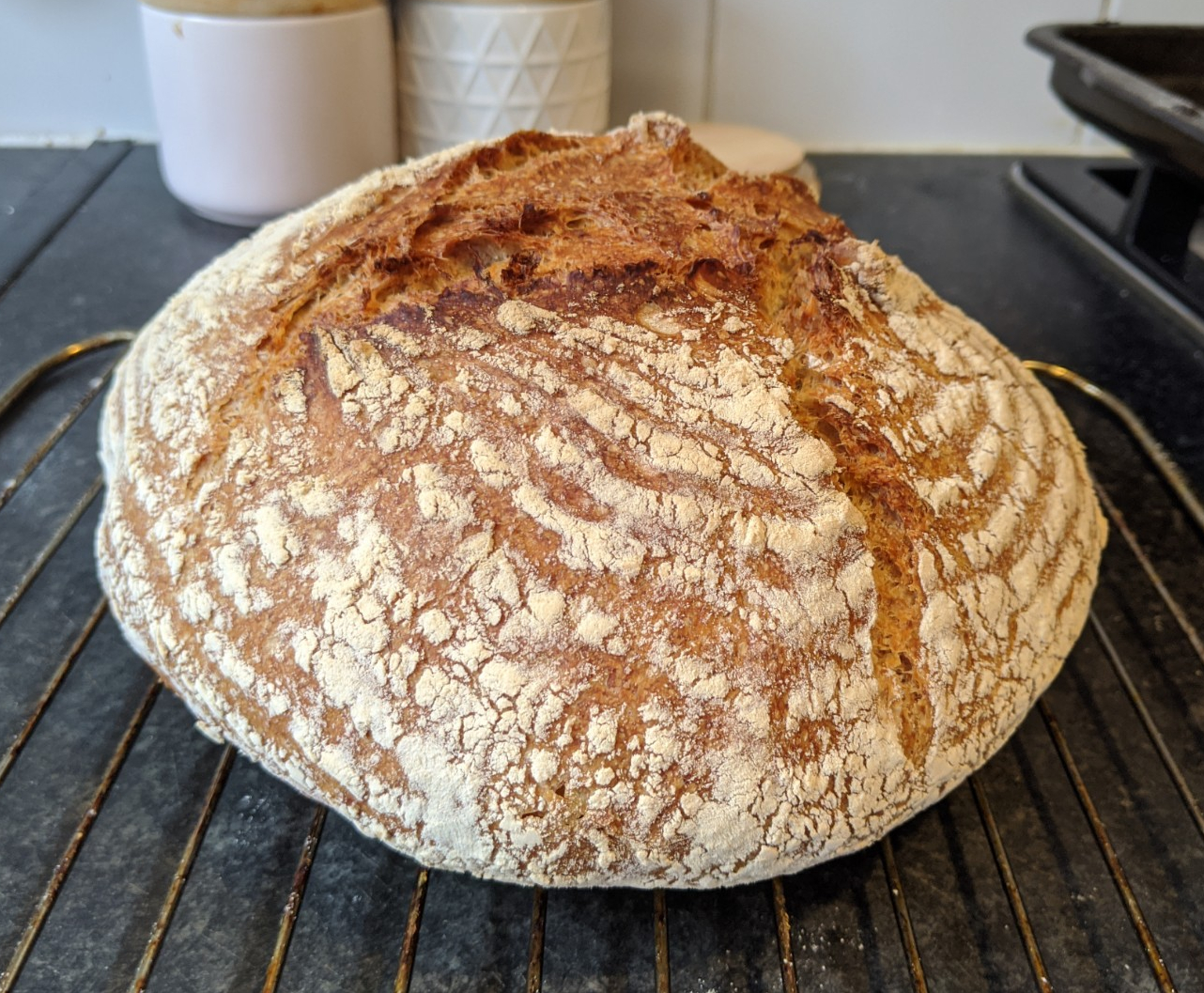
Bread

A good start is the Overnight White from Flour Water Salt Yeast by Forkish (fantastic author name for a food book).

2. Growing – and growing to eat
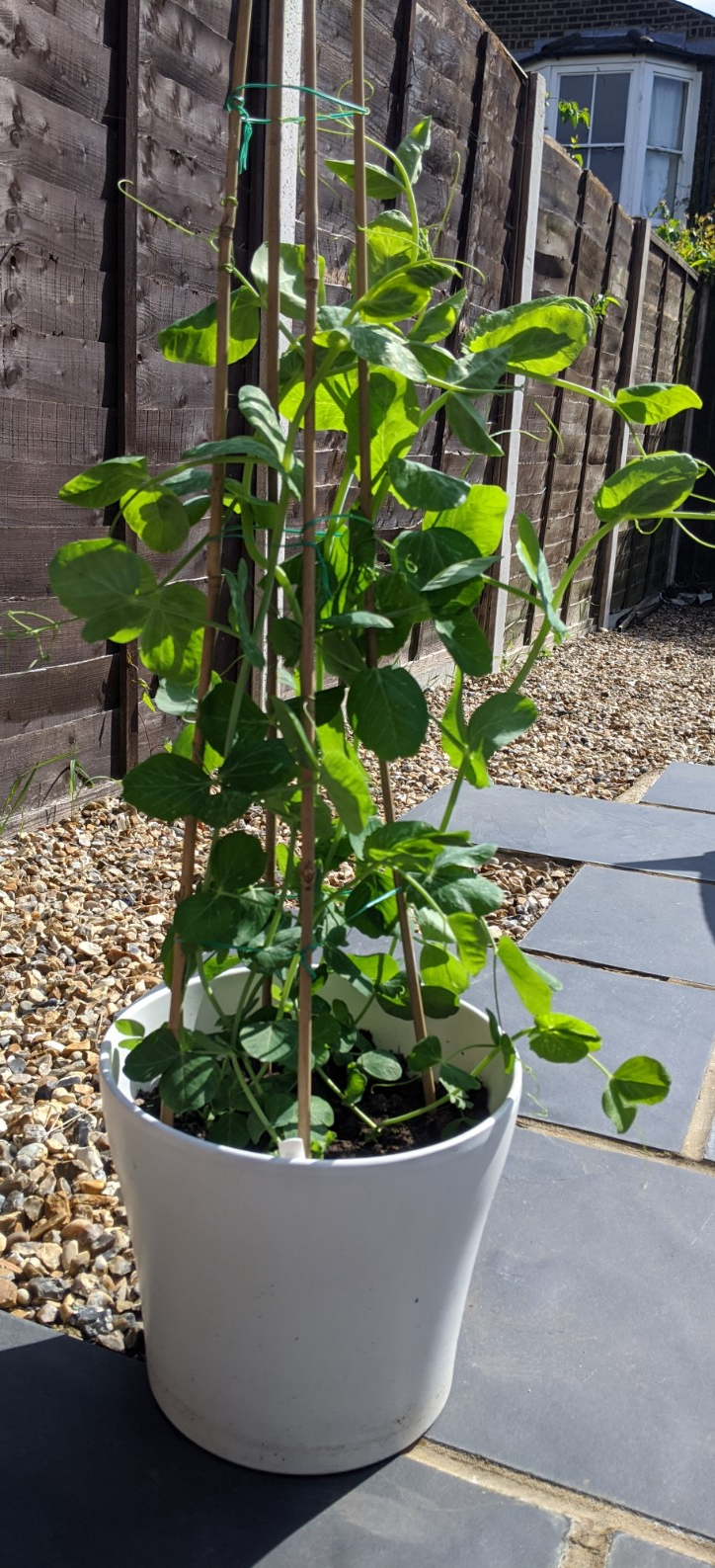
Garden peas

We don’t have a large garden, and it’s largely paved, meaning most of our growing happens in pots and a couple of elevated beds. I’m really enjoying pottering about each day. Some of our plants have been with us for years, and we’ve now got carrots, mangetout, strawberries, peas, celery, lettuce, spring onion, tomatoes, potatoes and herbs (including bay tree, parsley, mint and others). Some of these have been re-grown straight from kitchen scraps that would have otherwise gone in the bin.

It has been particularly fun to see some of the plants I’ve grown from seeds thrive – special shout out to my peas, madly climbing our homemade tepee trellis.

I’ve also started a worm compost with an Urbalive unit, reducing our food waste.

3. Fermenting

Most people – including myself, until recently – associated ferments with deeply unpleasant, stinky, odours. I’ve learned that a lot of what we eat is actually fermented – from naturally leavened bread, to wine, beer and sauerkraut. I’ve tried my hand at a few now, including carrots sticks with cardamom, kimchi and sauerkraut. Some have failed – the sauerkraut was particularly over-ripe, but some have been great!

My favourite by far has been tepache, a Mexican pineapple. See recipe here, and the It’s Alive video version here (with the inimitable wourder-drinker, Brad).

Tepache

For bonus quirk – I’m trying to make the top of the pineapple shoot out new roots so I can grow a new plant).

4. Gaming

Again, not a new one – but I’m really enjoying Red Dead Redemption 2 😉

5. Reading

Again, the two people who regularly read my blog will know that reading is not really a new habit for me. However, I started the year with a resolution to be more intentional about the types of books I read – to ensure I was being strategic. Lockdown, for me, has been tricky with reading. I am often tired at the end of each day, as the work and general stress of the situation has got to me. When I have enough energy, though, reading has been a constant source of joy. I am currently enjoying Montefiore’s biography of Jerusalem, and Wilcock’s analysis of Revelation (only coincidentally on the topic of apocalypse!). See my reading post from March showing some things I’m working through or have just finished.

IMG_20200319_211832_283

Stay safe.

Sunday is on the way

Each year I am struck by what a sense of isolation and helplessness the disciples must have felt on the first Good Friday and Holy Saturday.

All they had known for years came crashing down around them. Their messiah and deliverer died an ignominious death on a Roman cross.

The disciples had in their hearts a vision of political revolution; the establishment of an earthly kingdom. But what they had before their eyes was a crucified leader.

It is easy for us now, on Good Friday and Holy Saturday, to know that we are about to celebrate the resurrection. We know that we can celebrate His death on Friday because his resurrection on Sunday is on the way.

But in that moment, the disciples knew nothing of what was to come. 

They hadn’t read to the end of the book – of the victory to come. And even if they had, it was a different victory than the one they had anticipated, and they could not have comprehended, with their religious-political mindset.

But Jesus did know the end of the story. He knew of the victory to come. He knew Sunday was on the way.

Despite our strange isolation this year, we cannot really fully understand what the disciplines went through on that first Easter. But we can empathise with the isolation and a sense of helplessness.

More importantly – we can remind ourselves that Jesus knows the end of the story. Isolation is not the end. Victory – in some form or another – is on the way.

Sunday is on the way.

Amman Citadel: Being new among the old

I grew up in a young nation. The First Australians inhabited and stewarded the land for millennia, but urban record (as Europeans think of it) really dates only back from British colonisation (from 1776 onwards).

So, until I was 25, I had no real exposure to ‘old stuff’.

Visiting Amman Citadel was thus my first real encounter with an ‘old’ urban landscape. In my home town, Melbourne, properties from 1950 are considered old! By contrast, Amman Citadel has an archaeological record spanning from pottery Neolithic peoples through to the Roman, Byzantine and Islamic periods.

Amman Downtown

In my first visit, I was amazed at the length of the period of occupation, the scale of the site and the varied architecture.

Having since undertaken some additional study in archaeology, and visited it again a few times, I understand the features of the site better than I did then. I can appreciate better its strategic elevated location, the fortifications, the record of building and re-building; the use and re-use of materials… and the crucial focus on preserving water.

But nothing compares to that first visit, fresh from a ‘young’ urban tradition, placed deep into the middle of an old one. A few highlights for me are always the following.

Temple of Hercules

IMG_20200201_110827

Nobody could subjugate a city like the Romans could subjugate a city. You can imagine how the population must have felt about the might of Rome whilst looking the immensity of this temple atop the raised portion of the city.

Byzantine Church

The Byzantine Church dates to 550CE. While I stood in the ruins of the church, I was struck that I was standing in the very spot where, over a millennia ago, fellow believers had stood (or knelt) and worshipped in the same tradition that I do. Imagining the practicalities of services in that building (and its annexes) was a real joy.

Umayyad Palace

The entryway to the place is a beautiful cross-shaped entry hall with a stunning roof reconstruction, opening out into an immense palace (with, of course, water works and a colonnaded street).

Amman Citadel is in the heart of Amman downtown. Entry is 3JD and a visit will take about 2 hours.

On ice cream as a respite to a busy world

Our family is fond of telling a story of the time we ran into my grandfather at a supermarket car park when my siblings and I were much younger.

My grandfather – a man of high standing in the community, of amazing virtue, and of deep wisdom – was loitering near the indoor car park entrance, eating an ice cream, while waiting for my grandmother.

When he saw us, he looked slightly guilty and awkwardly asked us not to tell our grandmother that he was eating ice cream. By any stretch, it was a comical moment.

Predictably, once we got to the top of the stairs, we ran into my grandmother. Immediately, my brother, all of 5 or 6 at the time, told my grandmother that our grandfather was downstairs eating an ice cream.

For many years, the funny part of this story was that my brother ratted out my grandfather nearly immediately. That remains funny.

But as I’ve got older, and time has passed, the story has taken on other dimensions, at least to me.

The story now reminds me that my grandfather who was (and is), in many ways, super-human, was also human. And the human simply wanted a quiet moment with a simple pleasure.

The story now reminds me that, in lives devoted to finding meaning and giving it to others, sometimes we need these moments of banality.

The story now reminds me that sometimes we need to eat our ice cream as a quiet respite to a busy world.

And the story now reminds me that sometimes we need to be caught, to the delight of our grandchildren, doing something slightly naughty.

I wonder what else this story will remind me of in another 20 years.

What I’ve been reading – March 2020

Right. So we’re all locked in together in a COVID-19 state of joy. Here’s some of what I’ve been reading lately (and what I’m currently working through). I’m already 8 books in this year, because I had a lot of time on my hands in Amman!

IMG_20200319_211832_283

Necropolis, Catharine Arnold: This one charts a course through London’s relationship with its dead. Where and how does it bury its dead? The subject is a little dark, but ultimately it’s a fun romp through a kind of history that isn’t often written about. What is amazing is how major shifts in history radically change approaches to mourning and storing of the dead.

Jerusalem – the Biography, Simon Montefiore: I’m a quarter through this one and it is amazing! I struggled a bit with ‘the’ London biography, but this one is leagues ahead in terms of accessibility, flow and storytelling. I am looking forward to seeing how he dances his way through the fraught modern era. But really – isn’t all of Jerusalem’s history contested?

The Rule of Law, Tom Bingham: Our whole society is predicated on the rule of law. We obey the law, and so does everyone else. Without it, the economy dies and so does society, really. A rather topical read, given what’s going on (and what I’ve spent the last few months working on).

Misery, Steven King: Somehow I missed this modern classic before now. What a gripping, frightening, tense read! He really was the master. Was the whole thing a metaphor about his hatred of his cocaine addiction? I don’t care. It was just a good story.

The Ocean at the End of the Lane, Neil Gaiman: I’ve never read (as an adult) a book where the first-person protagonist was a child. I LOVED this book. Highly recommend for a quick weekend read.

First you Write a Sentence, Joe Moran: Have been trying to improve my writing but there aren’t very many good practical books that give you writing building blocks (other than Steven King’s On Writing). This one boiled down to “Don’t be too noun-y. Except when it makes sense. Or too verb-y. Except when you want to. And don’t use too many parentheses (except when you should).”

Preparing for Easter, CS Lewis: Who doesn’t love CS Lewis? This devotional has a thought for every day of Lent. Some days are better than others. It has been a very thoughtful journey so far.

Bonus – Ginger Pig Meat Book (because I want to be better at cooking), Easy Learning French Grammar and Practice (because I want to improve my French).

I’m also still slogging through the 15-book Wheel of Time series. More on that later.

I still need to do my 2019 wrapup. Maybe. One day.

On fear, sadness and COVID-19

In many ways, one of the saddest things about COVID-19 is the fear. The fear of each other, the fear of the future and the fear of being without.

I cried a little at Amman airport this morning when I saw two young children wearing face masks. Their parents carried on stoicly, but you don’t cover your children’s faces without being struck by some sort of fear (justified or not). It reminds me of the morning after the Finsbury Park mosque attacks. I was walking to the station and saw little boys and girls accompanied by their tired-looking parents. The children normally walked to school without adult supervision.

The parents were afraid. Literal survival was at stake.

There is something primal about the protection of a parent over a child. And in the case of COVID-19, it’s a risk that they cannot see nor fully comprehend. This event could still be anything and they don’t know how to protect their kin.

I also share in the fear. Today, I was nearly quarantined by flight restrictions. I would have been stuck outside of my home countries, without friends of family. In the hours when that seemed a real possibility, I was afraid. Even as I write this, waiting for the plane to take off, I am anxious.

But what of fear? Fear often comes from a sensible survival instinct, but there is also an element of sadness to it.

There is a sadness to it because a state of fear is your body telling you that something is not normal, is not safe.

Young children with their faces covered is not normal. It is not safe.

And in this case, the non-normal, non-safe state is such an unknown. If a lion is coming towards you, you know what you’re afraid of. In this very strange March 2020, we don’t really know what to be afraid of. Closed borders? Flu symptoms? Running out of bog roll? Each other?

Being afraid without fully knowing what to be afraid of is unusual.

Either way, this state is not normal. And it is not safe.

Yet we have Hope. “I lift up my eyes to the hills– where does my help come from?”

On the passage of time

There is a certain helplessness that comes with the passage of time.

“Time flies”, they said… but it never really rang true to me.

The older I get, the faster time seems to go. There’s a growing sense of running out of time.

When you are a child, the hours and days are endless. As a teenager, you can waste hours lying on your bed, doing nothing, and it costing you nothing.

Time no longer works like that for me.

Every day is full and somehow seems to have fewer minutes than the last.

It’s not a matter of not being in control. It’s that the march of time is speeding up.

And with it, my life.

It is perennially harder to find time for reflection, for prayer, for planning and for growth.

And when you blink, a month has gone.

It’s like being a passenger in a speeding tube of time.

There’s still so much to do, but so little time.

I wonder whether Jesus felt like this, approaching the end of his time on Earth. He had done so much… but did he have the feeling of running out of time as well?

Lent day 12, 2020. Amman, Jordan

On Ash Wednesday

From the love of my own comfort

From the fear of having nothing

From a life of worldly passions

Deliver me, O God

– Audrey Assad

Today is Ash Wednesday; the beginning of Lent.

Lent was (and is) not really something practiced in our church tradition. Pentecostalism was marked, amongst other things, by a desire to do away with many things that appeared liturgical or overly religious, and simply ‘follow the promptings of the (Holy) Spirit’.

So the Christian calendar (at least, apart from Christmas and Easter) was not something observed in our rhythm of worship. For its many wonderful qualities, I do think our tradition misses out on something by not observing some of these very old rhythms.

In my own situation, this Ash Wednesday, I am in a foreign country and away from friends and family. Perhaps as a result, I am acutely aware, maybe more than normal, of the significance of the season.

After all, by its nature, the season demands a certain amount of introspection and solitude.

Am I ready? I think of Him, I think of my faith and reflect on my shortcomings. I am grateful for His sacrifice.

Without Lent, without this season today, would I have this same sense of self-examination?

Likely not.

As the Teacher says in Ecclesiastes, “There is a time for everything under the sun”. And the reality is that this includes times of reflection and times of sorrow, along with times of celebration and times of joy.

Without the balance, we cannot appreciate the extremes.

So, today, I am grateful for Lent.

7 lessons I wish I had learned earlier

In my career so far, I’ve had the great fortune to live in three countries/continents and work in (for varying lengths) a dozen others. 

I sometimes wonder what I would tell myself if I had the great misfortune of being stuck in an elevator with myself from ten years ago. Reflecting on the (many) mistakes I made in those first ten years, I think I would say:

1. Talk less (smile more)

I had many thoughts and very clear opinions at the beginning and, naturally, wanted to tell everyone about them with a great degree of confidence. This was a bad idea. Your degree(s) get you in the room, but your ‘value-add’ (awful phrase) will mean you are heard. It’s great that schools and universities encourage contribution from those learning/emerging/young, but I wish I had tempered my enthusiasm and confidence with just a dash of realism (know your ‘known unknowns’). Chances are, many of my opinions and conclusions early on were wrong, and my approach was even worse. I just didn’t have the experience or nous yet. 

2. Watch how experienced operators work

I wish I had started earlier in watching how the experienced players relate to others in the room. A canny operator will often not speak or argue in such a way that alienates others. They make people feel heard, and don’t force opinions – they influence.

Remind yourself of point 1; don’t argue or speak until you know what you are saying is worth listening to. 

3. A career is a marathon, not a sprint

Someone told me this at the photocopier once, in quite a pointed way. I had probably been obnoxiously trying to game a system or suck up to someone. Ultimately, a career has elements of both sprints and marathons – but the long game is about settling in for the long haul. Long-term thinking – while ‘not throwing away your shot’ – is crucial.

4. You and your responses are the only elements in the mix you can control.

Stressful situations will come. In these situations, you can only control what you can control, and sometimes (often) you and your response to the situation are the only things you can control. A measured response (after a deep breath) will go a long way to proving your maturity, but an outburst will be long-remembered.

This mindset also helps you contextualise conflict and stress. Stress is real, but most of your ‘old’ conflicts and stresses will be meaningless with the passage of time. 

5. Don’t confuse a cock-up for a conspiracy 

Most of the time, a mistake is a mistake. It’s probably an honest one. Most of the time, nobody is out to get you (though sometimes they really are!). 

6. Own up to your mistakes

Sure, this has to be contextual – don’t send an ‘all staff’ email admitting to blocking the toilet. But if you made a mistake, you are better off fessing up to the right person, who can help you fix it and/or manage the fallout quickly.

7. Just be nice

It’s much easier to work with people when people don’t feel the need to tip-toe around or be afraid. This sort of works hand-in-hand with the entitled attitude I talked about in point 1. Healthy respect is good, and you should be firm about boundaries… But don’t be a douche for the sake of being a douche. People will be more willing to work with you – and more honestly – if you are gracious and constructive. This is particularly important for expert advisors.


One day maybe we can offer this advice to our past-selves, and create some sort of time-travelling paradox. In the meantime, let’s offer a prayer for anyone who had the  misfortune of working with the James from the late 2000’s.